
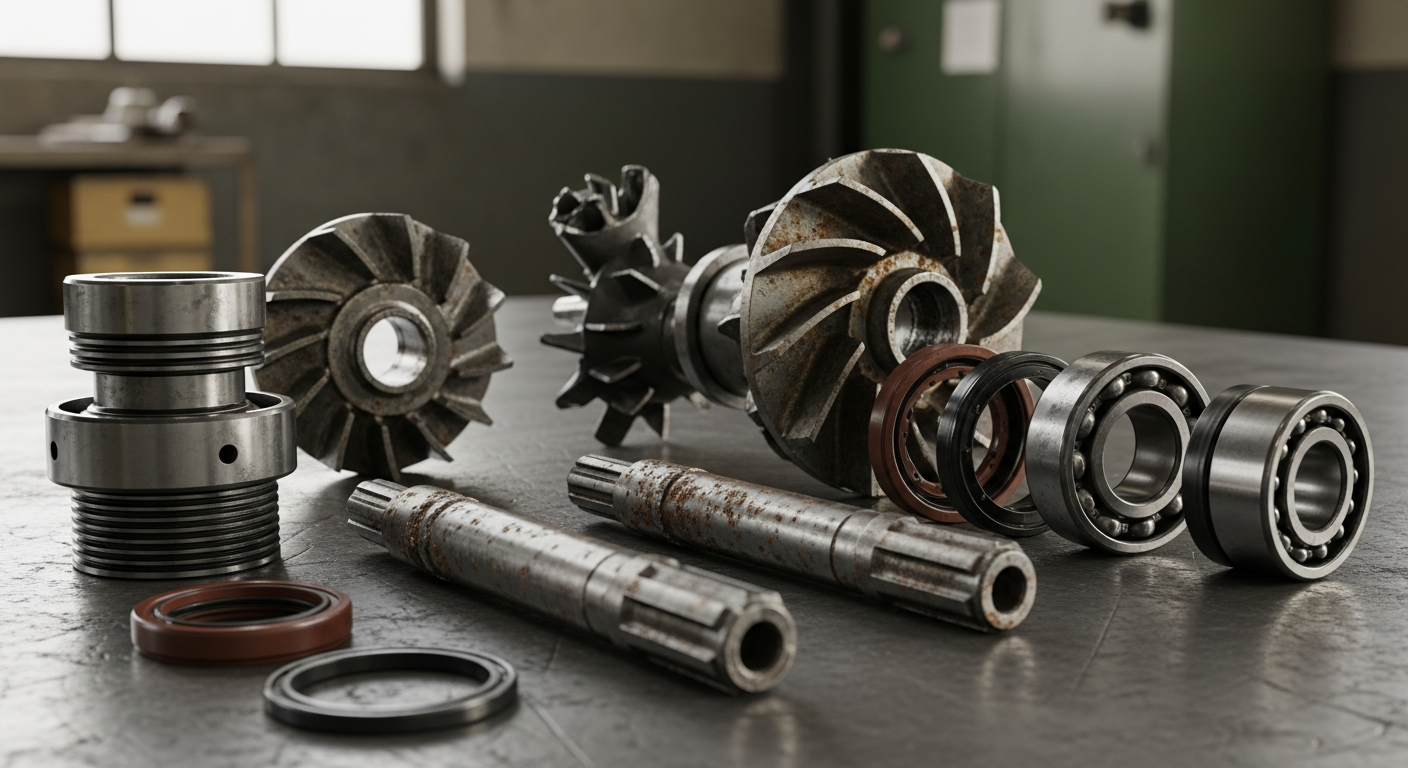
A failed rod or pump comes back to surface with evidence on it. Fatigue fractures look different from overload fractures. Corrosion pits look different from mechanical damage. Wear patterns tell you which side of the tubing the rod was contacting. Reading that evidence turns a single failure into a prevention program for every similar well.
Fracture Analysis
Fatigue fractures: smooth, semi-circular beachmarks radiating from an origin point, with a smaller final fracture region. The origin is usually at a stress concentration - pin shoulder, thread root, or mechanical damage. Beachmarks indicate cycles of crack growth under variable load. The ratio of smooth fatigue area to rough final fracture tells you how close the part was to runaway failure versus slow crack growth.
Overload fractures: rough, grainy appearance across the entire section. The load exceeded strength in one event. Usually indicates a shock load (fluid pound impact, stuck pump plus operator cycling), over-torque on make-up, or a fall during handling.
Brittle fractures (H2S service): chevron patterns pointing back to origin. Often associated with hydrogen embrittlement. Requires metallurgical review of material and environment history.
Wear Patterns
Side wear on rods and coupling OD indicates tubing contact. One-sided wear suggests buckling or deviation causing consistent contact on one side. Symmetric wear suggests rod rotation (rod rotators working as designed) or uniform contact from fluid pound.
Pump plunger wear: uniform honing indicates normal service. Grooves indicate abrasive damage (sand, scale). Gouges or tears indicate foreign object events.
Valve wear: pitting on ball and seat indicates cavitation (often from fluid pound). Erosion patterns indicate abrasive fluid. Sticky or deformed valves indicate paraffin or scale buildup.
Contextual Data
The component alone only tells part of the story. Pair it with: run time since last pull, produced fluid chemistry, pump configuration history, prior failure records on the well. A rod that failed at 800 days of service carries different meaning than one that failed at 200 days.
Turning RCA Into Prevention
Document every pull. Photograph failed components. Record failure type, location on string, and context. Build a failure database for the field. Patterns emerge across a fleet that are invisible on any single well - and those patterns tell you which prevention lever (material change, inhibitor adjustment, pump-off control, guide placement) will move the needle.
Bottom Line
Rod pump failures are readable. A pulled string is a forensic record. Teams that systematically document and analyze what they pull build institutional knowledge that cuts failure rates and run costs. Teams that pull, replace, and forget pay the same tuition over and over.