
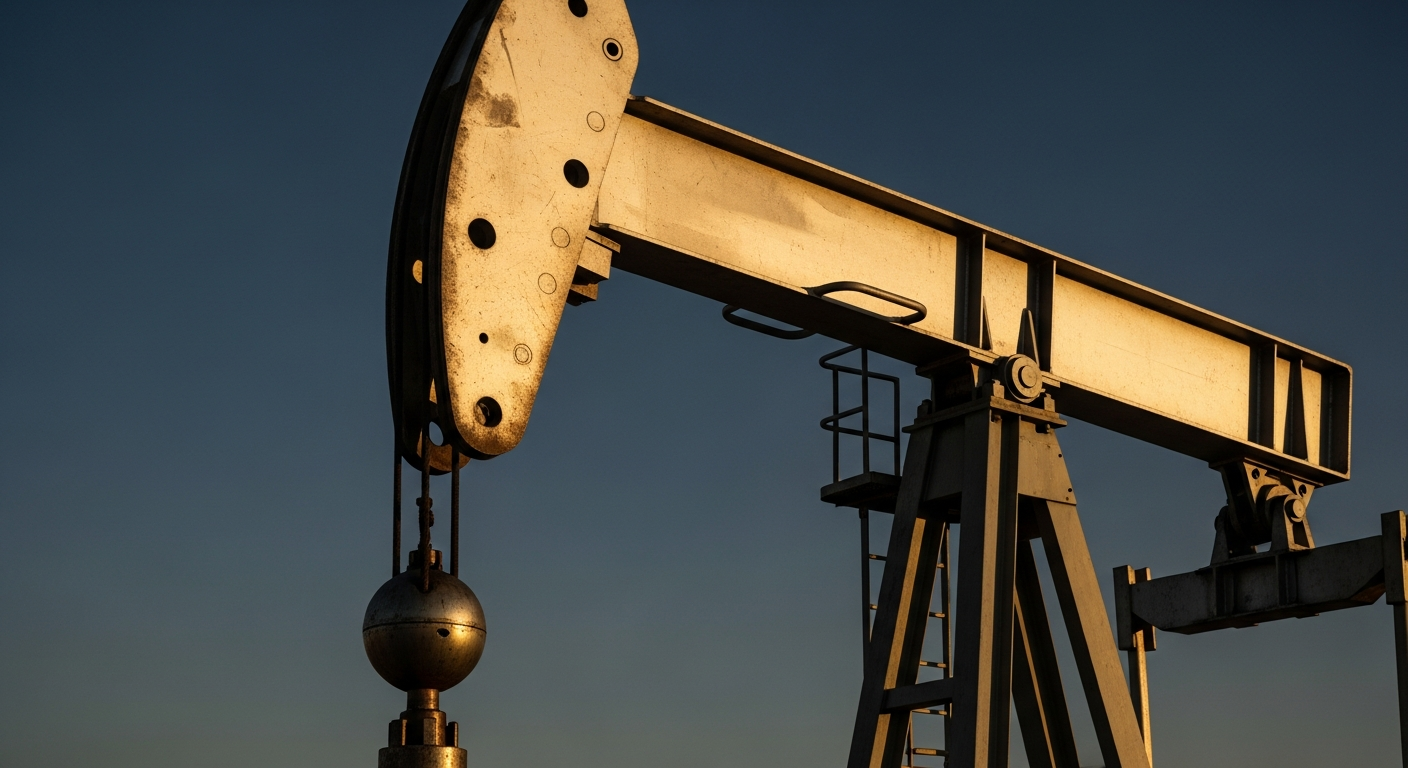
A sucker rod pump is the most common form of artificial lift in oil and gas wells. It is a positive displacement pump - it traps a fixed volume of fluid and forces it upward with each stroke. That simple mechanic is why rod pumps remain the default for deep, low-to-moderate-rate wells, and why every diagnostic on a rod-pumped well eventually comes back to one question: did the barrel fill.
The System
A full rod pumping system has surface and downhole components that work as one. At surface: the prime mover (electric motor or gas engine), the pumping unit that converts rotary motion into the reciprocating up-and-down stroke, the polished rod running through the stuffing box, and the rod string itself. Downhole: the pump barrel anchored in the tubing, the plunger moving inside it, and two check valves - the traveling valve attached to the plunger and the standing valve fixed at the bottom of the barrel.
The pump is set near or below the perforations so it can draw from the reservoir. The counterweights on the pumping unit balance the heavy rod and fluid loads, which reduces both energy consumption and peak gearbox torque.
The Operating Cycle
Each full cycle is one upstroke plus one downstroke. Per cycle, the pump displaces a volume roughly equal to the plunger area times the effective stroke length.
Upstroke
As the pumping unit lifts the rods and plunger, the weight of the fluid column above the plunger slams the traveling valve shut. The plunger rising now creates suction below it. The pressure difference opens the standing valve and reservoir fluid flows into the barrel. At the same time, the closed traveling valve lifts the fluid that was already above the plunger up the tubing toward the surface.
Downstroke
The plunger descends. The weight of the fluid now inside the barrel closes the standing valve. As the plunger pushes down on that trapped fluid, pressure rises below the plunger and opens the traveling valve. Fluid flows up through the traveling valve into the space above the plunger. The plunger essentially swaps places with the fluid, transferring it upward.
This cycle repeats thousands of times per day. Each complete stroke draws in a new volume of fluid and lifts the previously drawn volume one stroke closer to the surface.
The Displacement Formula
Theoretical displacement is:
Displacement (bbl/day) = 0.1166 × Plunger Diameter squared (inches) × Stroke Length (inches) × Strokes per Minute
Actual production is always lower than theoretical. Slippage around the plunger, incomplete fillage, gas expansion, and solids all reduce volumetric efficiency. Volumetric efficiency is the ratio that quietly runs every economic decision on a rod-pumped well.
Why the Basics Matter
Almost every rod pump problem is a variation on one theme: the barrel did not fill the way the design assumed. Fluid pound is the barrel not filling because there was nothing to fill it with. Gas interference is the barrel not filling because gas got in the way. Valve leakage is the barrel filling fine but not holding the fluid it captured. Rod failures, gearbox overload, high run-time energy bills - most trace back through the cycle above to a specific valve, a specific stroke moment, and a specific pressure differential.
This is why dynamometer cards (surface and downhole) and acoustic fluid level shots are the standard diagnostic tools. A healthy downhole card shows near-full fillage with sharp valve action. Every problem shape - pound, gas, valve, plunger wear - has a distinct signature because the underlying mechanics are this simple and this deterministic.
Bottom Line
A sucker rod pump is a reciprocating plunger with two check valves. The upstroke creates suction to pull fluid in. The downstroke displaces it upward. The counterweights balance the load. Everything more complex - optimization, failure analysis, economics - is built on that cycle. Engineers new to rod lift who internalize this before they touch a simulator move faster and make better decisions once they do.